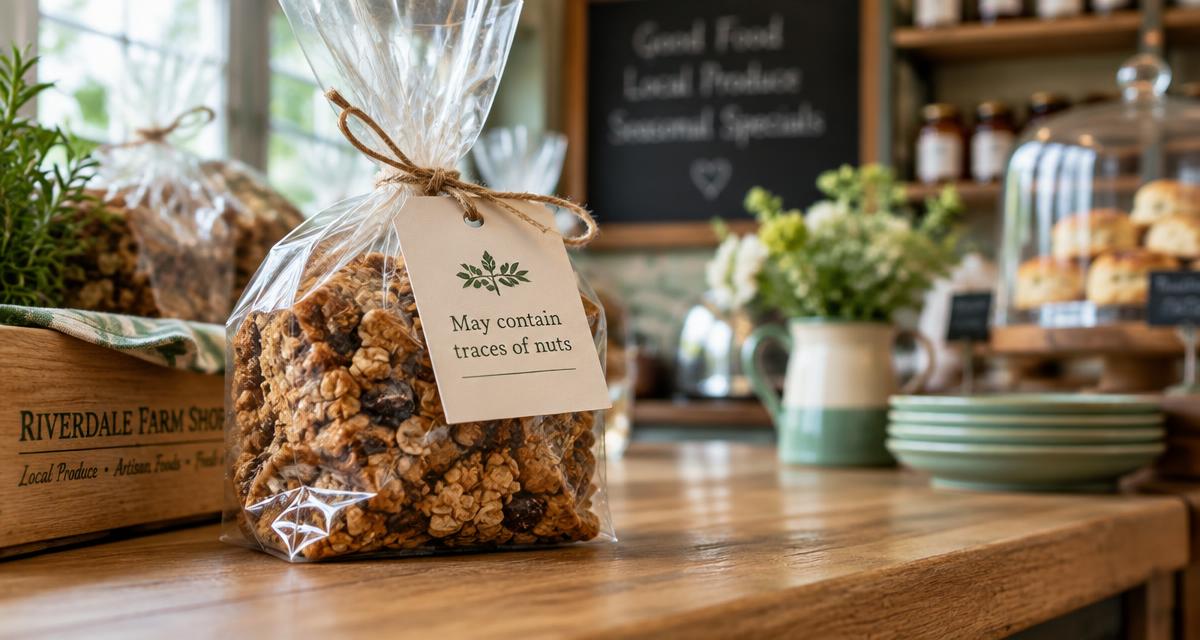
Walk down any supermarket aisle or read any café menu in the UK and you'll see phrases like "may contain nuts" or "made in a factory that handles milk". These are known as precautionary allergen labels — and they're widely misunderstood by businesses and customers alike. Here's what the Food Standards Agency (FSA) says about when to use them, when not to, and how to get them right.
What Is Precautionary Allergen Labelling?
Precautionary allergen information — often called "may contain" labelling or PAL — is a voluntary statement used to warn customers about the unintentional presence of one or more of the 14 regulated allergens. It covers risks that remain even after reasonable controls are in place, such as:
- Cross-contact in a shared kitchen or production line
- Ingredients supplied from factories that handle allergens
- Shared equipment, fryers, or storage areas
Unlike the mandatory allergen declaration for ingredients intentionally used in a recipe, precautionary labelling is not a legal requirement — but when a genuine risk exists, the FSA expects businesses to communicate it clearly.
When Should You Use a "May Contain" Warning?
The FSA is clear: precautionary allergen labelling should only be used after a thorough risk assessment shows a real, unavoidable risk of cross-contact that cannot be removed through cleaning, separation, or supplier controls.
Good reasons to use it include:
- A small kitchen where flour dust is genuinely airborne throughout service
- A shared fryer used for breaded (gluten-containing) and non-breaded items
- A supplier who cannot guarantee their ingredient is free from traces of an allergen
When You Should NOT Use It
Just as important is when not to reach for a "may contain" statement:
- As a blanket disclaimer. Adding "may contain everything" to every product or dish to cover yourself is exactly what the FSA warns against. It dilutes the message, removes meaningful choice for allergic customers, and suggests you haven't assessed your actual risks.
- As a substitute for good allergen management. Precautionary labelling must never replace proper cleaning, separation, staff training, and accurate ingredient records. If the risk can be controlled, control it — don't label it.
- Without a risk assessment. If you haven't looked at where cross-contact could realistically occur, you're guessing — and guessing in either direction puts customers at risk.
What the Law Says
The Food Information Regulations 2014 and Natasha's Law (the Food Information (Amendment) (England) Regulations 2019) make allergen declaration mandatory for ingredients deliberately present in food. Precautionary labelling sits outside these requirements — it is voluntary — but the General Food Law still requires that food sold is safe, and the FSA can take action where businesses fail to manage or communicate genuine risks.
In short: you won't be fined for not writing "may contain", but you can absolutely face enforcement if a customer is harmed by a risk you knew about and didn't manage or disclose.
Best Practice for Hospitality Businesses
Assess each dish individually – identify where cross-contact could genuinely occur during prep, cooking, and service.
Be specific – "may contain traces of peanuts" is far more useful to a customer than a generic "may contain allergens".
Train your team – staff should be able to explain what your "may contain" statements mean and which dishes they apply to.
Keep it up to date – a new supplier, a new fryer, or a menu change can all alter your cross-contact risks.
Make it visible – precautionary information should be as easy to find as your main allergen information, whether that's on a menu, a label, or a digital allergen menu.
Best Practice for Retail and Food-To-Go
For prepacked and PPDS products, precautionary statements sit alongside the mandatory ingredient list with allergens emphasised. The same rules apply: risk-assess first, be specific, and never use "may contain" as a shortcut around proper controls.
How Allergenius Helps
A digital allergen menu makes precautionary information easy to manage. With Allergenius you can add "may contain" notes to individual dishes or products, update them the moment a supplier or process changes, and give customers accurate, dish-specific information via a simple QR code — no reprinting, no guesswork.
Ready to Simplify Allergen Management?
If you're looking for a solution to display your allergens to your customers, Allergenius makes it easy with digital menus and QR codes.