Buffets are brilliant for guests and hard work for anyone with a food allergy. Dishes sit side by side, spoons wander between bowls and the person who cooked the food is often nowhere near the table. Good buffet allergen labelling solves most of that. This guide explains what UK law says about allergens on buffets and self-service food, when a wrapped item needs a full label, and the practical steps that keep weddings, parties and pub function rooms safe.
Latest update (30th October 2026)
- The government’s guidance on prepacked for direct sale (PPDS) labelling for event caterers was first published on 25th June 2026 and last updated on 17th July 2026. It confirms that on a buffet you must give allergen information for each food item separately.
- The same guidance says individually wrapped sandwiches can need a full PPDS label, but one large platter of sandwiches does not.
- Owen’s Law, which would make written allergen information compulsory on menus, is still a proposal. A Leigh Day update on 1st October 2026 said it had not been enacted as of September 2026.
Why buffets need extra care
According to the FSA-funded Patterns and Prevalence of Adult Food Allergy study, reported by Allergy UK incorporating Anaphylaxis UK, around 6% of UK adults, roughly 2.4 million people, have a clinically confirmed food allergy. At a wedding of 100 guests, it is very likely that at least one person is managing an allergy.
On a plated menu, a server can check each order with the kitchen. On a buffet, guests serve themselves. The label in front of the dish is often the only thing standing between a guest and a reaction, so it has to be right.
The cost of getting it wrong is real. In a case reported by the Trading Standards Institute, a bride told her caterer about her nut allergy and was assured the food was nut free. At the buffet, her sponge cake contained almonds. The caterer admitted an offence under the Food Safety Act and was ordered to pay £3,156.36 in total, including an £850 fine. The bride said her day was ruined.
What the law says about buffet allergen labelling
Most buffet food is non-prepacked, or “loose”, food. The rules for loose food apply, with one important extra for buffets.
Allergen information for each dish
The FSA’s technical guidance for non-prepacked food says: “Where food is provided through a buffet format, the allergen information should be provided for each food item separately.” The government guidance for event caterers says the same: you need to give allergen information for each food item separately.
So a single sign saying “some dishes contain nuts” is not enough. Guests need to know which dishes contain which of the 14 allergens.
Written or verbal?
By law, you can give allergen information for loose food in writing or verbally. If you rely on staff to tell people, you must signpost it clearly, for example with a notice saying “Please talk to us if you have a food allergy, intolerance or coeliac disease.” Whatever method you use, the FSA guidance says the information must be accurate and easily accessible.
On a buffet, verbal information is hard to do well. Guests serve themselves, staff may be busy clearing tables and the chef may be back at base. That is why written labels at each dish are the practical choice for most caterers and pubs. The FSA’s best practice guidance for the out of home sector, last updated on 5th March 2025, also expects written allergen information alongside a conversation with the customer in England, Wales and Northern Ireland. That guidance is best practice, not law, but it is what many environmental health officers will look for.
When buffet food needs a full Natasha’s Law label
Natasha’s Law covers prepacked for direct sale (PPDS) food: food packed on the same premises it is sold from, before the customer orders it. PPDS food needs a label with the name of the food and a full ingredients list with allergens emphasised. For event caterers, the government guidance gives some useful examples.
| Buffet item | PPDS label needed? |
|---|---|
| One large platter of sandwiches | No. Give allergen information for the platter |
| Sandwiches individually wrapped in cling film before guests choose them | Yes, if the wrapping meets the definition of packaging |
| Loose cakes, rolls or sandwiches on display | No. Give allergen information for each item |
| Food packed at the customer’s request | No |
| A specific food ordered in advance, such as a pre-ordered buffet | No full ingredients label, but you should still give the mandatory allergen information |
| Hot drinks made to order | No |
If you individually wrap items in advance, such as cupcakes in bags or wrapped sandwiches for a working lunch, check them against the PPDS rules. A label at the table does not replace the ingredients label that PPDS food needs. Our Natasha’s Law compliance guide explains the full labelling requirements.
How to label allergens on a buffet: step by step
1. Start with accurate dish records
Every label is only as good as the recipe behind it. Record every ingredient in each dish, including sauces, dressings, garnishes and anything bought in. Check supplier labels and specifications rather than memory, and update the record the day a supplier or recipe changes. Our free allergen matrix template gives you a simple grid to record all 14 allergens for every dish.
2. Ask about allergies before the event
For weddings and private parties, ask the organiser to collect guests’ allergies with the RSVPs, and confirm the list in writing a few days before. The wedding case above shows how often the problem is not the cooking but the message getting lost between booking and service. Pass the list to everyone involved, from the chef to the person setting out the food.
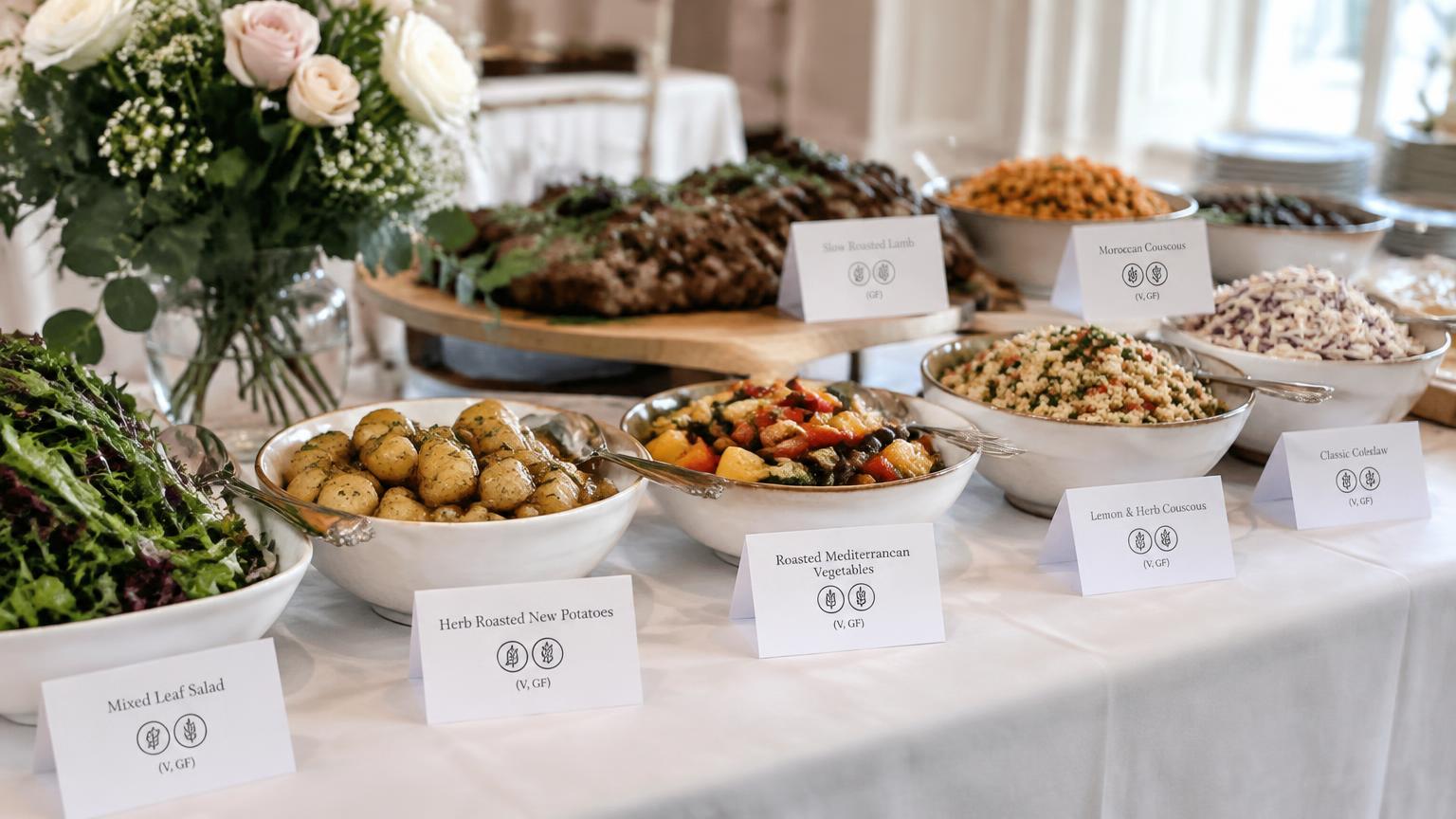
3. Make a label for every dish
Each label should show:
- the dish name, matching the name on your records
- the allergens it contains, written in words as well as icons
- a short line asking guests to speak to staff about allergies
Words matter because icons alone can be misread. “Contains: milk, egg, wheat (gluten)” is clear to everyone.
4. Keep labels with the right dish
Labels on loose cards drift. Use card holders, clip-on labels or labels fixed to the serving dish, and check them when food is topped up or a dish is swapped. If the kitchen sends out a replacement dish, it needs its own label.
5. Offer a safe route for guests with allergies
Self-service is the riskiest part of any buffet. Consider letting guests with known allergies serve themselves first, before spoons have moved between dishes, or plate up their food separately in the kitchen and bring it out to them. A separately prepared, clearly labelled plate is often the safest option of all.
6. Have someone who can answer questions
Name one person on the day who knows where the allergen records are and can check with the kitchen. Make sure guests know who that is. Our guide to allergen training for staff covers what every team member needs to know.
Preventing cross-contact at self-service
A perfect label can still be undone by a shared spoon. These checks help keep allergens where they belong.
Buffet cross-contact checklist
- Every dish has its own serving spoon or tongs, and staff replace any that end up in the wrong bowl.
- Dishes containing nuts, peanuts or sesame are placed at the end of the table, away from other food, or on a separate table.
- Breads, crackers and anything with crumbs sit apart from gluten free dishes.
- Sauces, dressings and dips have their own spoons and are not poured over mixed platters at the last minute.
- Garnishes such as toasted nuts or seeds are only used where the label says so.
- Food is topped up with fresh dishes rather than mixing new food into old.
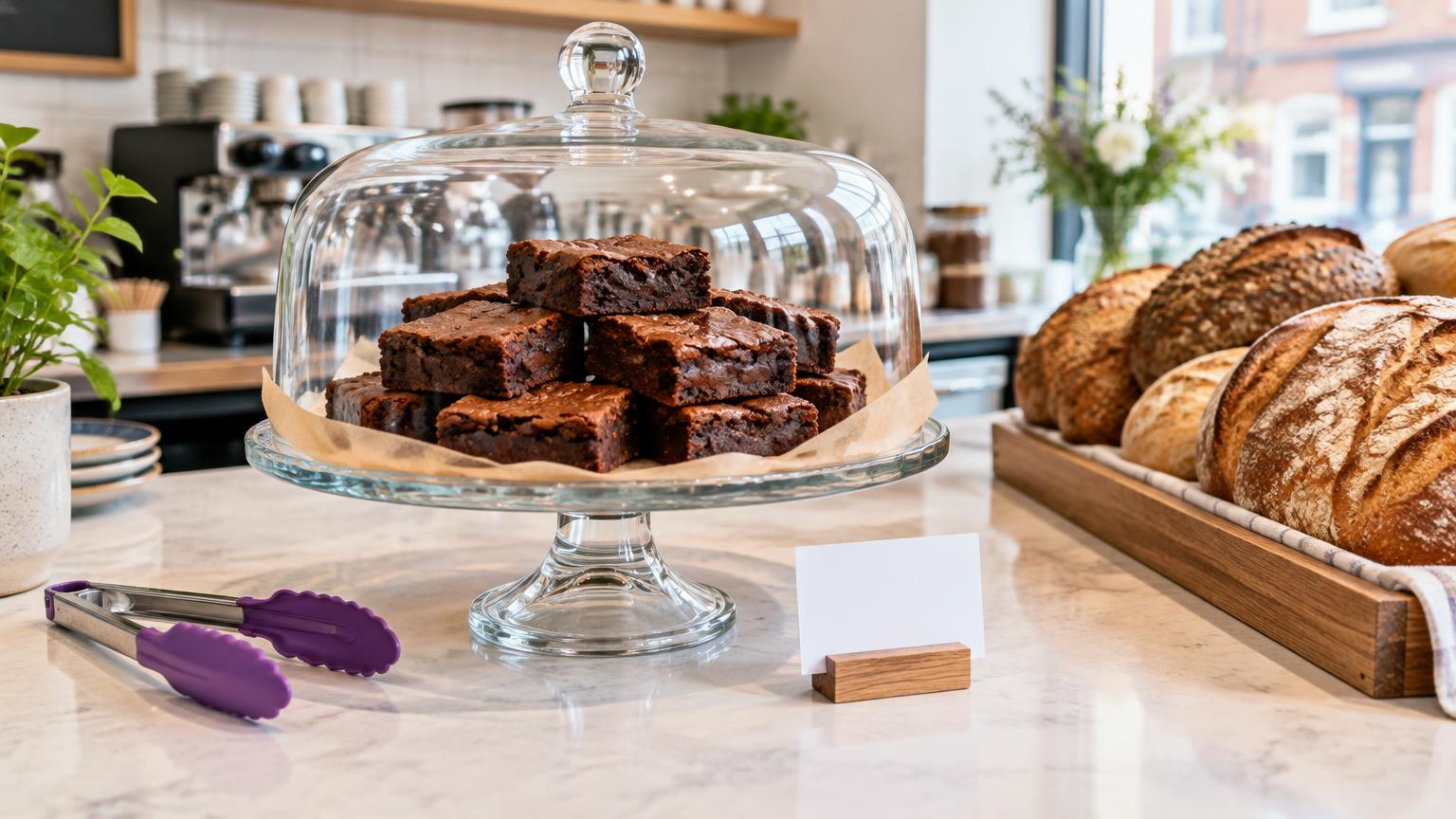
- Desserts and cakes are labelled as carefully as savoury dishes.
- Drinks are covered too: cocktails, mixers and beers at the bar can contain allergens. Our pub guide to allergens in drinks explains what to look for.
- Staff know not to say a dish is “safe” if they are unsure. They should check, or explain the risk so the guest can decide.
Be honest about the risk
You cannot fully control what guests do with serving spoons. If there is a real chance of cross-contact on a self-service table, say so on a sign near the buffet and offer guests with allergies a separately prepared plate. Our guide to may contain warnings explains when a risk statement is the right call and when it is not.
Delivered buffets and sharing platters
Many pubs and cafes sell buffet platters for offices, funerals and parties, often ordered by phone or online. These count as distance selling. The FSA guidance says mandatory allergen information must be available before the purchase is concluded and at the moment of delivery, at no extra cost to the customer.
In practice, that means:
- allergen information on your order form, website or menu before the customer orders
- a written list of allergens for each item on the platter, packed with the delivery
- a phone number the customer can call with questions
If you sell food for delivery more widely, our takeaway and delivery allergen rules guide goes into more detail.
Make buffet allergen information easier with a QR code
Printed labels work, but guests often have questions that a small card cannot answer. A digital allergen menu can sit alongside your labels.
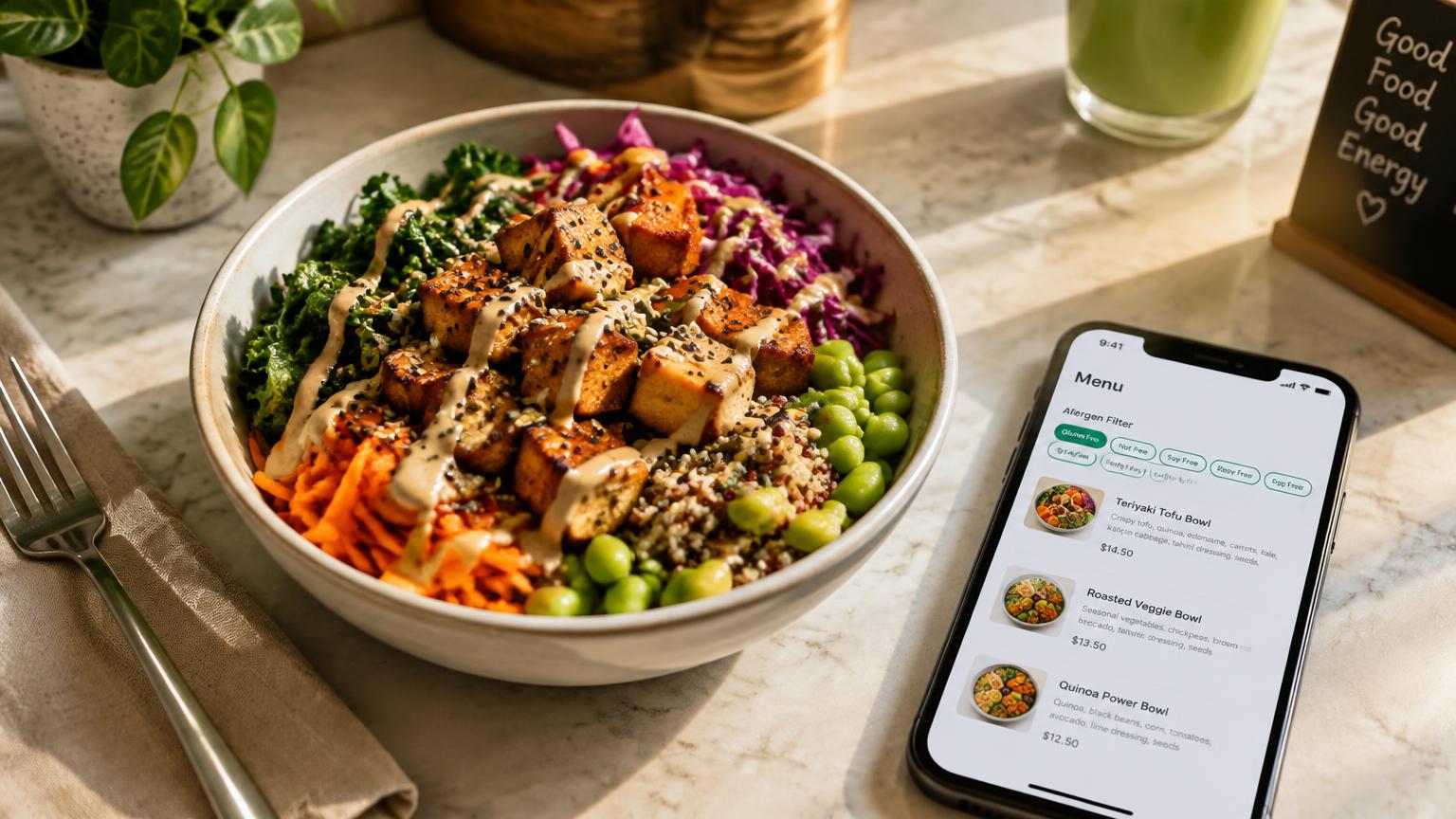
With Allergenius, you add each buffet dish once with its 14 allergens and build a separate menu for each event or function. The system creates a QR code you can print on a table sign or the order of the day. Guests scan it with their phone camera, with no app needed, and filter the dishes by the allergens they need to avoid. If the kitchen swaps a dish on the day, you update it once and the change goes live straight away.
A QR code adds to your table labels and your conversations with guests. It does not replace the full ingredients label that prepacked for direct sale food needs. If you want to know how QR menus fit with the rules, read are QR code allergen menus compliant in the UK?
What is law and what is best practice
| Topic | Status today |
|---|---|
| Giving allergen information for each buffet item separately | FSA technical guidance on the law for loose food |
| Providing information on the 14 allergens for loose food, verbally or in writing, with clear signposting | Law |
| Full ingredients label on PPDS food, such as individually wrapped sandwiches | Law (Natasha’s Law) |
| Allergen information before ordering and on delivery for distance selling | Law |
| Written allergen information alongside a conversation for loose food | FSA best practice guidance (England, Wales and Northern Ireland) |
| Owen’s Law: compulsory written allergen information on menus | Proposed, not yet law |
Buffet allergen labelling: a quick summary
- Give allergen information for every dish on a buffet, not one general sign.
- Written labels at each dish are the practical way to do it, backed by a named member of staff.
- Individually wrapped items made in advance may need a full Natasha’s Law label.
- Separate spoons, sensible table layout and a safe plate for guests with allergies cut the risk of cross-contact.
- Keep records up to date and check labels every time food is topped up or swapped.
See it in action
Try the Allergenius demo menu on your phone and filter by an allergen to see what your guests would see.
Ready to replace paper allergen folders for your events and function room? Sign up to Allergenius and build your first buffet menu today, or see the plans on our pricing page. If you would rather we set it up for you, ask about our done-for-you set-up.
Frequently asked questions
Do you have to label allergens on a buffet in the UK?
You must give allergen information for each item on a buffet separately. The law lets you do this in writing or verbally, but on a self-service buffet written labels at each dish are the most practical and reliable way to do it. The FSA also recommends written information as best practice.
Does a platter of sandwiches need a Natasha’s Law label?
Not if it is one large shared platter. Government guidance for event caterers says individually packaged sandwiches would be PPDS, but one large platter of sandwiches would not. You still need to give allergen information for the platter.
What should a buffet allergen label say?
The dish name, the allergens it contains written in words (for example “Contains: milk, egg, wheat (gluten)”), and a line asking guests to speak to staff about allergies. Icons can help, but words are clearer.
How do I stop cross-contact on a self-service buffet?
Give every dish its own serving utensil, keep high-risk dishes such as those with nuts or sesame at the end of the table, top up with fresh dishes rather than mixing, and offer guests with allergies the chance to serve first or have a plate prepared separately.
Do delivered buffet platters need allergen information?
Yes. When customers order by phone or online, allergen information must be available before they order and when the food is delivered, free of charge. A written allergen list packed with each delivery is the simplest way to do this.
Is Owen’s Law in force?
No. Owen’s Law, which would make written allergen information compulsory on menus, is still a proposal. A Leigh Day update on 1st October 2026 said it had not been enacted as of September 2026.
Ready to Simplify Allergen Management?
If you're looking for a solution to display your allergens to your customers, Allergenius makes it easy with digital menus and QR codes.
Get the free allergen matrix (PDF + editable Excel)
Enter your details and we'll email you both versions – the printable PDF for the kitchen wall, and the fill-in Excel version for your computer.
We'll email your download link straight away. A member of our team may be in touch to see how you're getting on. See our privacy policy.