Christmas menu allergens: why the festive season needs extra care
Your Christmas menu is probably the busiest, most changeable menu you run all year. New dishes arrive for a few weeks, bought-in puddings and sauces appear, party bookings come in with long lists of dietary needs, and agency staff join the team just when the pressure peaks. That is exactly why Christmas menu allergens deserve their own plan.
The rules do not change at Christmas. If you serve a dish that contains any of the 14 allergens, you still have to tell customers. What changes is how many new recipes you have to get right at once, and how little time you have to do it.
This guide walks through where allergens hide in festive food, how to handle pre-orders and group bookings, and a simple checklist to get your seasonal menu ready before the first party arrives.
Latest update (6th November 2026)
- Law now: for food that is not prepacked (meals in restaurants, pubs and cafes, and takeaway food), you must give allergen information for every item that contains any of the 14 allergens. You can do this in writing, or verbally with a clear written notice telling customers how to ask. (FSA allergen guidance, updated 17th July 2026)
- Best practice, not law: the FSA’s best practice guidance says written allergen information, backed up by a conversation with staff, works best. (FSA best practice guidance)
- Proposed, not law: Owen’s Law, which would require written allergen information on menus, had not been enacted as of September 2026 and remains under consideration. (Leigh Day, 1st October 2026)
What the law requires for your Christmas menu
Non-prepacked festive dishes
Most of what you serve at Christmas, from a plated turkey dinner to a slice of yule log at the counter, is non-prepacked food. The FSA guidance is clear that you must supply allergen information for every item that contains any of the 14 allergens. You can choose how:
- full written allergen information on a menu, chalkboard or information pack, or
- verbally, as long as a written notice in a clearly visible place tells customers how to get the information.
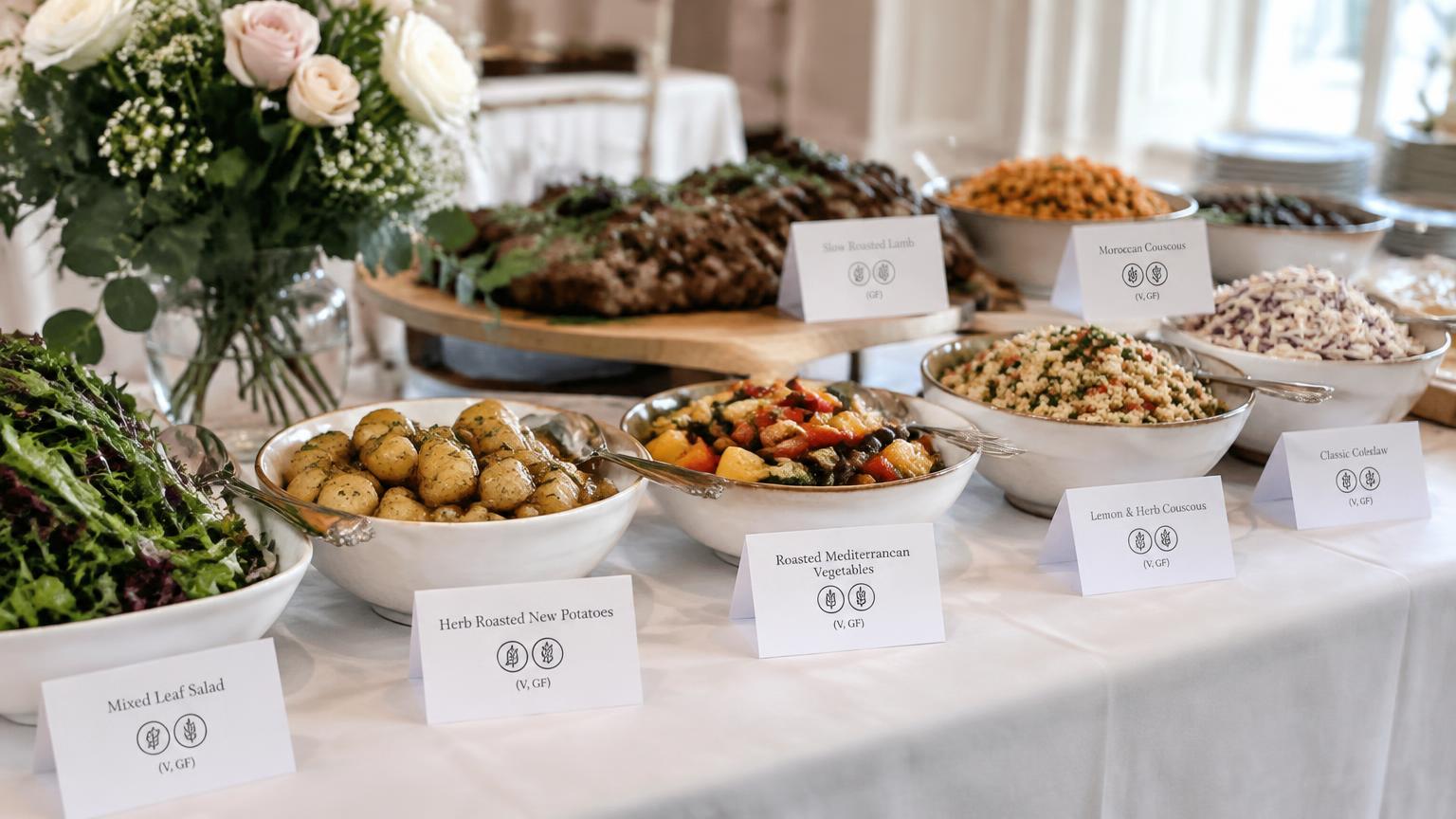
For buffets, the FSA says information must be given for each item separately, not for the buffet as a whole. If you are taking festive orders for delivery or collection, customers need the information before they buy and again when the food arrives. Our guide to takeaway and delivery allergen rules covers that in more detail.
Prepacked for direct sale: boxed mince pies and festive hampers
If you are boxing up mince pies, selling jars of homemade chutney or wrapping slices of Christmas cake before customers order them, that food is likely to be prepacked for direct sale (PPDS). Since 1st October 2021, PPDS food must carry a label with the name of the food and a full ingredients list, with allergens emphasised, for example in bold. (FSA PPDS guidance)
A digital menu or allergen sheet does not replace that label. The FSA says an allergen sheet “is not a substitute for PPDS food labelling.” If you are not sure where the line falls, our Natasha’s Law guide for cafes and food-to-go explains it.
Where allergens hide in Christmas food
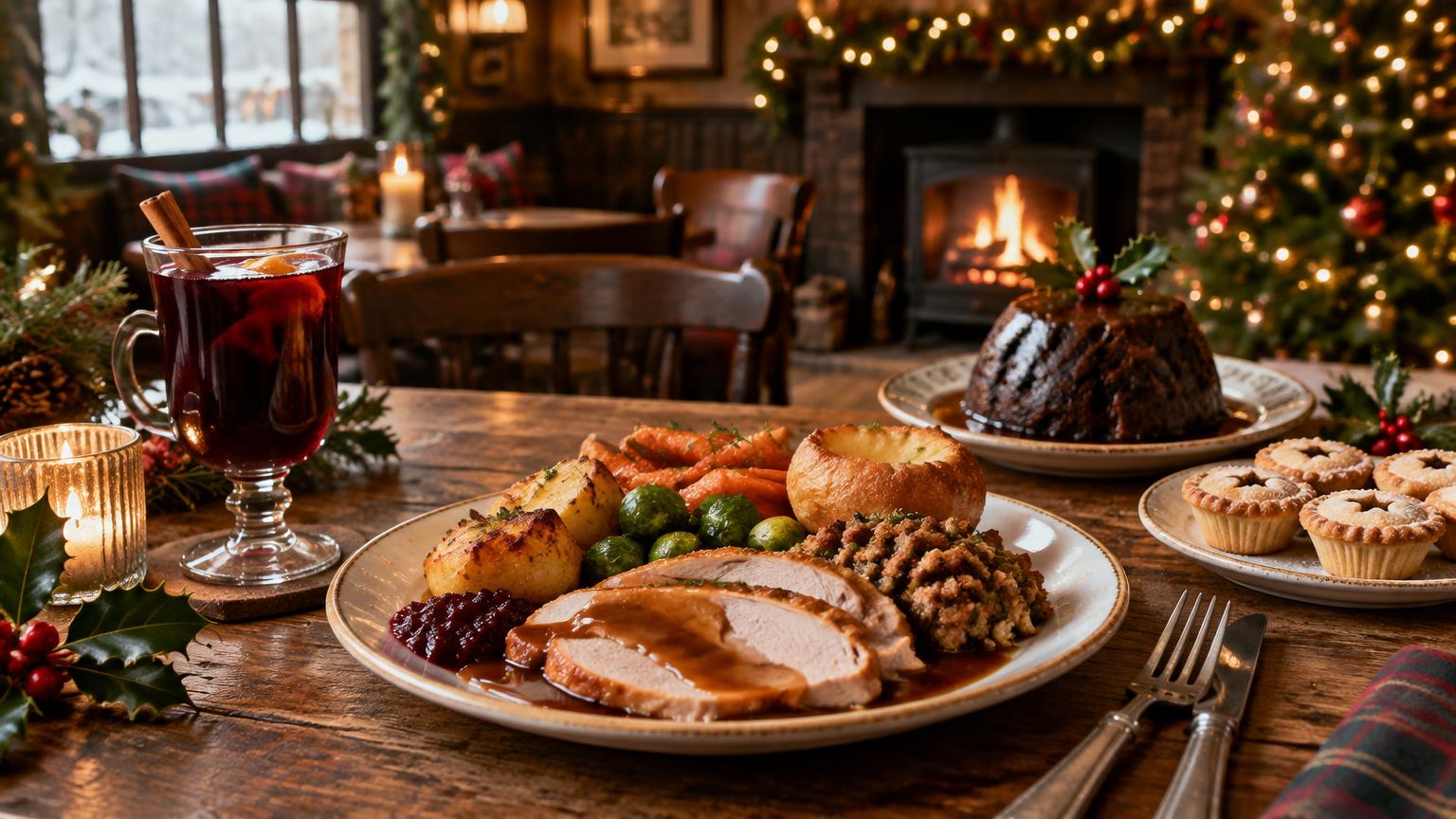
Festive recipes lean heavily on nuts, dried fruit, butter, cream, flour and alcohol. Anaphylaxis UK highlights mincemeat treats (Christmas cake, Christmas pudding and mince pies) as commonly containing eggs, milk, tree nuts, wheat and sulphur dioxide or sulphites, and points to stuffing, festive sauces, marzipan, praline and dressed-up sprouts as other common sources. (Anaphylaxis UK)
The table below is a starting point for checking your own recipes. Every kitchen’s version is different, so always check your recipe and the labels of anything you buy in.
| Festive dish | Allergens it often contains | What to check |
|---|---|---|
| Christmas pudding, Christmas cake, mince pies | Eggs, milk, tree nuts, cereals containing gluten, sulphites | Bought-in versions, suet, any nut topping, brandy or sherry |
| Stuffing | Cereals containing gluten, eggs, tree nuts, sometimes celery | Breadcrumbs, chestnuts or other nuts, sausage meat |
| Pigs in blankets and sausages | Cereals containing gluten, sulphites | Rusk and preservatives in the sausage |
| Gravy | Cereals containing gluten, celery, sometimes milk or sulphites | Stock cubes or bases, flour thickener, wine |
| Bread sauce | Milk, cereals containing gluten | Butter, cream, type of bread |
| Brussels sprouts with extras | Milk, tree nuts, sometimes sesame | Butter, chestnuts, almonds, cheese, seeds |
| Honey and mustard parsnips | Mustard | The glaze and any dressing |
| Prawn cocktail | Crustaceans, eggs, sometimes mustard or fish | Mayonnaise, Marie Rose sauce, Worcestershire sauce |
| Smoked salmon starter | Fish, sometimes milk and cereals containing gluten | Cream cheese, blinis or bread |
| Nut roast | Tree nuts or peanuts, cereals containing gluten, celery | The nut mix, binder and stock |
| Trifle and yule log | Milk, eggs, cereals containing gluten, sometimes sulphites or tree nuts | Sponge, custard, sherry, decorations |
| Mulled wine and festive cocktails | Sulphites, sometimes milk or eggs | Wine, cream liqueurs, egg white in cocktails |
Drinks deserve their own check. Anaphylaxis UK notes milk in cream liqueurs, cereals containing gluten in beers and spirits, and sulphites in wine. Our guide to allergens in drinks goes through beer, cider, wine and cocktails in detail.
If any of the 14 allergens are new to some of your seasonal staff, share our guide to the 14 allergens as part of their induction.
The festive pressure points
Bought-in products and last-minute swaps
Christmas is when kitchens buy in the most: puddings, desserts, sauces, stuffing mixes, chocolates for the coffee. Each one needs its allergen information recorded from the label or supplier specification before it goes on the menu.
The bigger risk is the swap. If your usual supplier runs out and you buy a different brand of stuffing or pudding, the allergens can change. The FSA’s best practice guidance says businesses should keep last-minute substitutions to a minimum, and if one happens, check the ingredients and update the allergen information. Its main allergen guidance also says you need to consider the impact when recipes change and keep allergen records up to date.
Shared kit and busy service
Festive service often means more dishes cooked on the same equipment: nut roasts and turkey sharing oven trays, gravy ladles moving between pans, mince pies dusted on the same bench as gluten-free alternatives. Our guide to allergen cross-contamination in small kitchens has practical controls you can put in place before the rush. If you are tempted to add “may contain” warnings to cover yourself, read our guide to precautionary allergen labelling first.
Seasonal and agency staff
New faces at Christmas may not know your dishes or your allergen process. A short briefing on the festive menu, where the allergen information lives and who to ask if they are unsure goes a long way. Our allergen training guide for staff covers what to include.
Christmas party pre-orders and group bookings
Pre-ordered set menus feel safe because you know the dietary needs weeks in advance. The FSA’s best practice guidance warns against relying on that alone. For pre-ordered group bookings, it says allergen information should also be discussed with individuals on the day, before the food is served, because it may not be enough to rely only on information supplied in advance.
A simple process for party bookings:
- Share allergen information when you send the menu. Give the organiser a link to your festive menu with full allergen details so guests can choose safely, rather than relying on one person to pass messages on.
- Ask about allergies on the pre-order form. Record each guest’s name, dish and allergen requirement, not just “1 x nut allergy”.
- Pass it to the kitchen in writing. The FSA says requirements should be recorded and passed to the person preparing the food in writing.
- Check again on the day. Confirm with the guest at the table before serving, in case anything has changed since they ordered.
- Make the plate identifiable. The FSA suggests food should be identifiable, for example with a label or marker, and that the server verbally confirms it meets the guest’s requirement.
Why written festive allergen information helps
The FSA’s research with people who have food hypersensitivity shows why clear written information matters. In surveys run between December 2024 and February 2025, only 10% of adults with food hypersensitivity said they can always get the allergen information they need, and 38% said they feel awkward or embarrassed to ask staff questions. (FSA research, October 2025)
At Christmas, when the room is loud and staff are rushed, a menu that customers can check for themselves takes pressure off both sides. It also gives the person with an allergy a starting point for a calmer, better conversation with your team.
Your festive allergen checklist
Work through this before your Christmas menu goes live.
- List every new festive dish, side, sauce, dessert and drink
- Record allergens for each from your recipes and supplier labels
- Keep the labels or specs for every bought-in product
- Decide what happens if a supplier substitutes a product, and who updates the allergen record
- Label any boxed mince pies, cakes or hampers packed before sale with full PPDS labels
- Show allergen information for each buffet item separately
- Add an allergy question to party pre-order forms, with guest names
- Brief seasonal and agency staff on the festive menu and your allergen process
- Agree how party orders reach the kitchen in writing and how plates are marked
- Put a clear allergen notice where customers can see it
- Plan when the festive menu comes off and your normal menu returns
Running a Christmas menu with Allergenius
A paper allergen folder struggles at Christmas. You need a second set of sheets for the festive menu, and every swap means reprinting. If you prefer to start on paper, our free allergen matrix template is a good place to begin.
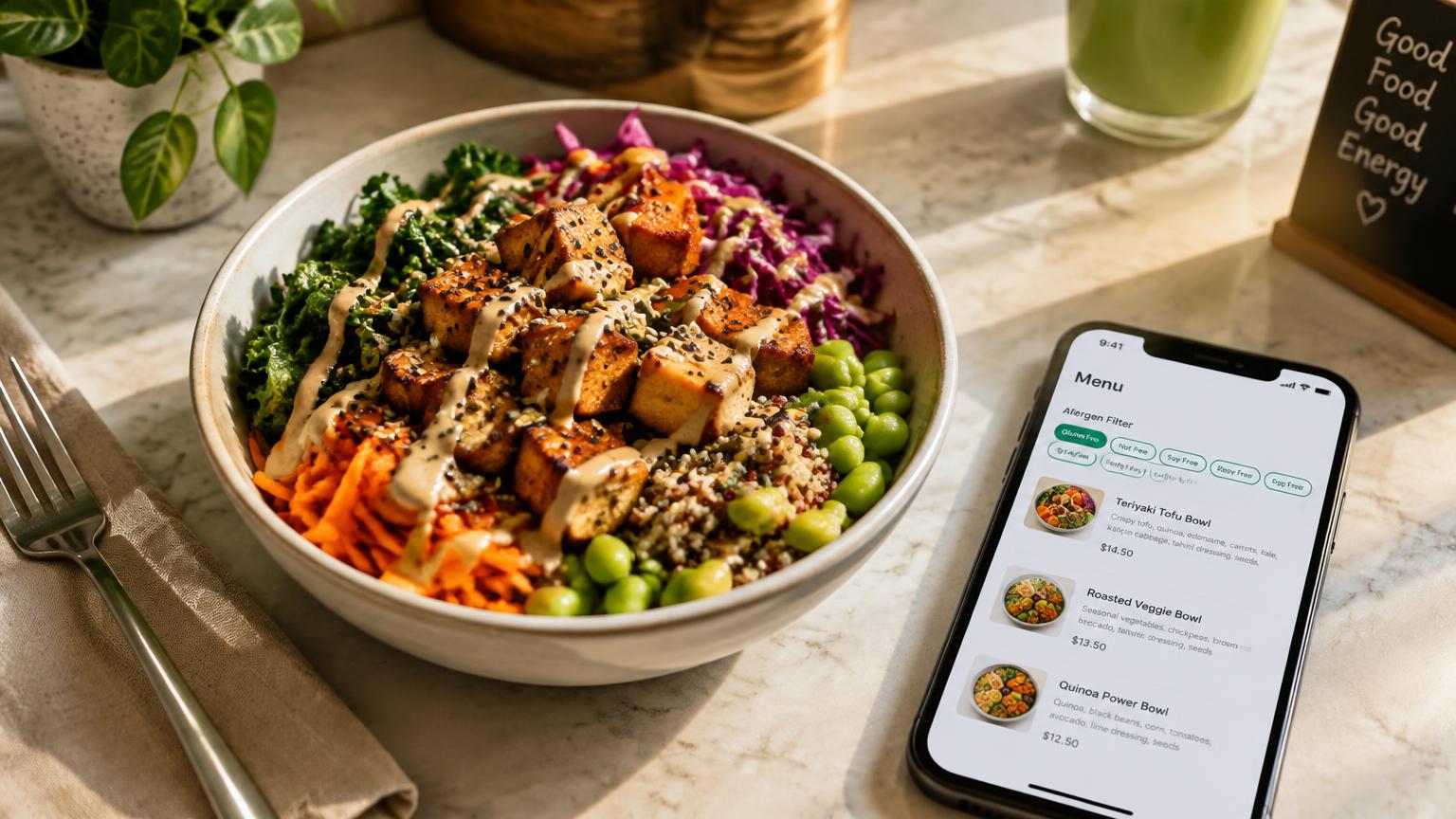
With Allergenius you can add your festive menu as its own menu alongside your regular one, enter each dish with its 14 allergens, and share it with a QR code or link. Customers scan with their phone, no app needed, and filter the menu by the allergens they need to avoid. If a supplier swaps your stuffing in mid-December, you update the dish and the change goes live straight away, so your printed table tents and party menus never go out of date.
You can also send the menu link to party organisers when you confirm a booking, so every guest can check dishes before they pre-order.
See it for yourself: open the demo menu and try filtering by an allergen. When you are ready, sign up and build your Christmas menu in time for the first party. Plans and options are on the pricing page.
Frequently asked questions
Do I need a separate allergen matrix for my Christmas menu?
You need allergen information for every dish you serve, including festive specials. The law does not say it must be a separate document, but in practice a new menu means new dishes to record, so most businesses create a festive version of their matrix or a separate festive menu in their digital system.
Do Christmas party pre-orders change my allergen duties?
No. You still have to provide allergen information for every dish. FSA best practice adds that for pre-ordered group bookings you should also check allergen needs with individuals on the day, before the food is served, rather than relying only on the pre-order.
What allergens are most common in Christmas food?
Festive food often contains tree nuts, milk, eggs, cereals containing gluten and sulphites, especially in Christmas pudding, Christmas cake, mince pies, stuffing and sauces. Celery and mustard can appear in gravies, stocks and glazes. Always check your own recipes and product labels.
Do boxed mince pies need an allergen label?
If you pack them on your premises before a customer orders them, they are likely to be prepacked for direct sale. Since 1st October 2021, PPDS food must be labelled with the name of the food and a full ingredients list with allergens emphasised. An allergen sheet or digital menu does not replace that label.
Is it a legal requirement to put allergens on the Christmas menu in writing?
Not at the moment. For non-prepacked food you can give allergen information in writing, or verbally with a clear written notice telling customers how to ask. The FSA recommends written information as best practice, and Owen’s Law, which would make written information a requirement, is proposed but not yet law.
What should I do if a supplier changes a festive product?
Check the new product’s label or specification, update the dish’s allergen information before you serve it, and tell your team. The FSA’s best practice guidance says last-minute substitutions should be kept to a minimum and allergen information updated whenever one happens.
Ready to Simplify Allergen Management?
If you're looking for a solution to display your allergens to your customers, Allergenius makes it easy with digital menus and QR codes.
Get the free allergen matrix (PDF + editable Excel)
Enter your details and we'll email you both versions – the printable PDF for the kitchen wall, and the fill-in Excel version for your computer.
We'll email your download link straight away. A member of our team may be in touch to see how you're getting on. See our privacy policy.