If you run a food truck, a street food van or a gazebo at weekend events, the food truck allergen requirements in the UK are the same as for any restaurant. You must tell customers about the 14 major allergens in your food, and anything you wrap before it is ordered needs a full label. What changes is everything around you: a tiny kitchen, a queue twenty deep, a different pitch every weekend and an event organiser who wants paperwork before you even arrive.
This guide covers what the law says, what is only proposed, and how to keep allergen information right when your menu and pitch change. Selling from a fixed stall? See our market stalls allergen guide.
Latest update (16th October 2026)
The Food Standards Agency's guidance on prepacked for direct sale (PPDS) labelling for mobile sellers and street food vendors now sits on GOV.UK. It was first published there on 25th June 2026 and last updated on 17th July 2026. The rules themselves have not changed: they have applied since 1st October 2021.
The FSA's companion guidance for event caterers was published on GOV.UK on the same dates.
Owen's Law (mandatory written allergen information for freshly prepared food) is still a proposal, not law. The FSA's 2025 best practice guidance is voluntary. We found no Bill before Parliament as of today.
The law is the same, the conditions are harder
There is no separate allergen law for mobile caterers. A van, trailer or cart follows the same rules as a café or pub, which means two duties.
Duty 1: tell customers about the 14 allergens
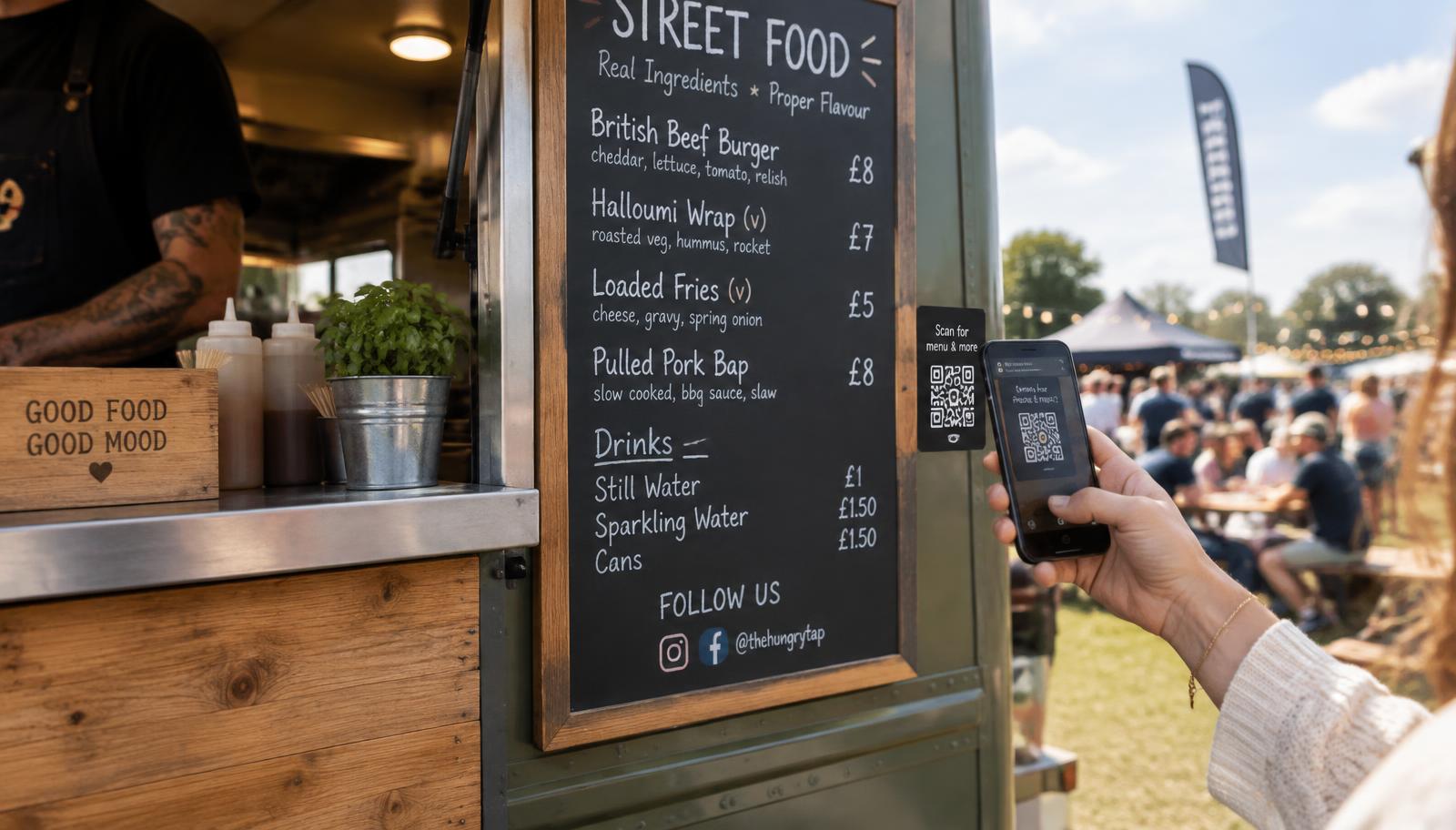
For loose food (anything not packed before the customer orders), you must be able to tell customers whether any of the 14 major allergens are in each dish. The law lets you choose how: verbally, on a menu, on a chalkboard or on a notice. The FSA's mobile seller guidance is clear that you "can choose how to present it".
Duty 2: label anything prepacked for direct sale
This is where many mobile caterers get caught out. Natasha's Law, which came into force on 1st October 2021 across the UK, requires food that is prepacked for direct sale (PPDS) to carry a label with:
- the name of the food
- a full ingredients list
- the 14 allergens emphasised in that list (bold, capitals, a contrasting colour or underlining)
The FSA confirms that food sold from mobile outlets can be PPDS, and that the rules still apply if you pack food at home or in a unit and then drive it to the pitch. Handwritten labels are fine as long as they are legible and meet the legal requirements. An allergen sheet on the counter does not replace a label on a PPDS item.
What counts as PPDS in a van?
The FSA's mobile seller guidance gives very practical examples. The test is simple: was it packed before the customer chose it?
| Food or drink | PPDS? | What you need |
|---|---|---|
| Burgers wrapped and ready to sell | Yes | Full PPDS label |
| Cartons of chips or nuggets packed in advance under a hot lamp | Yes | Full PPDS label |
| Drinks poured and lidded before anyone orders | Yes | Full PPDS label |
| Packaged sandwiches or salad boxes made on site | Yes | Full PPDS label |
| Chips packed into a carton only when ordered | No | Allergen information, any format |
| Burgers and onions cooking on an open hot plate | No | Allergen information, any format |
| Hot drinks made to order | No | Allergen information, any format |
| Pizza slices on an open tray | No | Allergen information, any format |
| Bottled drinks or crisps bought from a wholesaler | No, these are prepacked | Already labelled by the manufacturer |
Small sauce pots are a special case. If the largest surface of the pot is under 10 cm², you do not need a full label, but you must show a "Contains" statement (for example "Contains: Milk, Egg") and have the ingredients available another way.
Practical tip: batching cartons before a rush is an easy way to end up selling PPDS food without realising. If you pre-pack, print labels. If you do not want to label, pack to order.
Small space, shared surfaces: managing cross-contact
A food truck has one fryer, one griddle and about a metre of prep space. That makes cross-contact the biggest real-world allergen risk you face, and it is something an environmental health officer (EHO) will ask about.
The Bath and North East Somerset Council checklist for event food traders is a good example of what local authorities expect on the day. It asks traders to:
- keep open allergens separated and sealed or labelled
- use separate equipment for allergens
- use a separate display board and knife for samples that contain allergens
- display an allergen warning sign at the order point
- have allergen charts for every dish available to staff and customers
Habits that work in a van:
- Prep allergen-free or "free from" orders first, before the griddle sees butter or the fryer sees battered fish.
- Use colour-coded tongs, boards and squeeze bottles, and keep them on their own hook.
- Be honest about shared fryers. If gluten-free chips go in the same oil as battered products, they are not suitable for coeliac customers and your information must say so. Our guide to may contain and precautionary allergen labelling explains how to word this.
- Keep supplier labels for every ingredient in the van, not at home. If a sauce supplier changes a recipe, you need to know on the day.
What event organisers now ask for
Festival and event organisers often check traders before giving them a pitch. The National Caterers' Association (NCASS) Festivals and Outdoor Catering Guide 2026 sets out what organisers are advised to request. On allergens, it says organisers can require written information on all food products in advance, a completed allergen matrix, or allergen signage on display.
The same guide also advises organisers to:
- ask for proof of which council you are registered with
- specify a minimum food hygiene rating, with a rating of 4 (Good) described as a suitable minimum for high-risk food at large outdoor events
- request evidence of food hygiene training in advance
- check insurance, with £5 million each for employers', public and product liability described as the industry standard
On registration, councils such as Torridge District Council say a mobile food business should register with the council where the vehicle is stored overnight, at least 28 days before trading. Check your own council's page, as the details vary.
Having your allergen information ready to email or link to saves last-minute scrambling when the trader pack arrives. If you do not have a matrix yet, start with our free allergen matrix template.
Showing allergen information at a busy hatch
The law says you must provide allergen information. It does not say you have to wait for customers to ask. The FSA's 2025 best practice guidance for non-prepacked food (voluntary, not law) recommends that:
- written allergen information is easy to find, ideally without having to ask
- if it is not on the menu, a clear sign tells customers where it is
- staff ask every customer about allergies, or a sign does it where that is not possible
- if you use digital information, you also offer another way to get it, in case someone cannot use it or the technology fails
The FSA's suggested wording for a sign is: "Please talk to us if you have a food allergy, intolerance or coeliac disease. We want to cater safely for everyone."
At a busy hatch, a laminated allergen folder is hard to use. It gets wet, it slows the queue and it goes out of date the moment you swap a supplier. Many traders now combine three things:
| Method | Why it helps at events |
|---|---|
| A street food allergen sign at the order point | Prompts customers to speak up before they order |
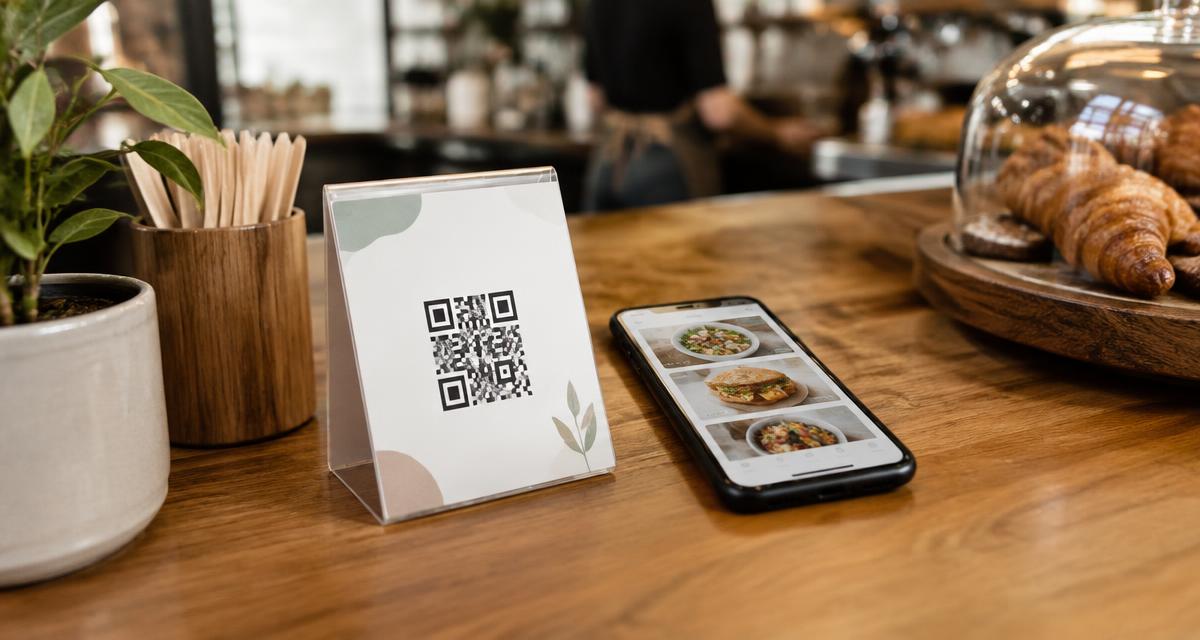
| A QR code on the hatch or menu board | Customers check allergens on their own phone while they queue |
| A printed backup sheet or matrix in the van | Covers anyone without a phone, and signal dead spots at festivals |
Is a QR code alone enough? We cover this in detail in Are QR Code Allergen Menus Compliant in the UK?. The short answer: it is a great way to give written information, but keep a non-digital backup and make sure staff can still have the conversation.
With Allergenius, your QR code links to a live allergen menu that customers can filter by allergen, with no app to download. One code on the hatch covers every event.
Changing menus by event
Most mobile caterers run several menus: a short one for a Friday night market, a bigger one for a festival, another for a wedding. Every change is a chance for allergen information to go wrong.
Rules that keep things safe:
- One source of truth. Keep allergen data per dish, not per menu. When you build an event menu, pick dishes from that list so the allergens come with them.
- Update before you print. If a dish or supplier changes, update your records before the event, not after.
- Check the specials board. A one-off special still needs allergen information. It is easy to forget when it is written in chalk at 11am.
- Brief the team at set-up. A two-minute run-through of today's menu and its allergens is worth more than any folder.
Allergenius lets you keep several menus (for example "Friday market", "Festival" and "Private events") on one account, with the allergens stored once per dish. Change an ingredient and every menu that uses it updates instantly, so the QR code on your hatch is always right.
Private events and weddings
Private bookings work slightly differently.
- Pre-ordered food is not PPDS. The FSA's event caterer guidance says food ordered in advance by a client for an event is not PPDS. If guests choose on the day from packaged options, those items are PPDS, even if a guest gave their dietary needs beforehand.
- Check again on the day. The FSA's best practice guidance recommends discussing allergens with individuals on the day for pre-orders, because ingredients may have changed since the booking.
- Phone and online orders are distance selling. PPDS labelling does not apply, but you must give allergen information before the sale is completed and when the food is delivered. Our takeaway and delivery allergen rules guide covers this.
For weddings, get a list of guests' allergies a few weeks out, confirm it in the final week, and mark place cards so serving staff know who gets what.
Printable mobile caterer allergen checklist
Use this before every event season, and a shortened version before every pitch.
Before the season
- Registered with the council where the van or trailer is kept overnight
- Allergen information recorded for every dish, covering all 14 allergens
- Supplier labels or specifications kept for every ingredient
- PPDS labels designed for anything you pre-pack
- Staff trained on allergens and on what to say when asked
- Food safety management system up to date (such as Safer Food Better Business)
Before each event
- Event menu built from your dish list, allergens checked
- Allergen information or matrix sent to the organiser if requested
- Labels printed for any pre-packed items
- Specials and new suppliers checked for allergens
On the day
- Allergen sign at the order point
- QR code on the hatch and a printed backup sheet in the van
- Separate, colour-coded equipment for allergen-free orders
- Open allergens sealed and stored separately
- Team briefed on today's menu and its allergens
The bottom line
Mobile caterers follow the same allergen law as every other food business: give clear information on the 14 allergens, and fully label anything prepacked for direct sale. The difference is doing it from a hatch, in the rain, on a new pitch every weekend. Keep your allergen data in one place, label what you pre-pack, and give customers a quick way to check for themselves while they queue.
One QR code on the hatch, updated from your phone. See how it looks to a customer on our demo menu, then sign up to build your own. Plans start at £15 a month, or we can set everything up for you from a one-off £125.
Frequently asked questions
Do food trucks need to display allergen information in the UK?
Food trucks must provide information on the 14 major allergens for every dish, but the law lets you choose the format: verbally, on a menu, on a board or on a notice. The FSA's voluntary best practice recommends written information that customers can find without asking, plus a sign inviting them to speak to staff.
Do I need to label food I wrap before customers order?
Yes. Food packed before the customer orders, such as wrapped burgers or chips boxed under a hot lamp, counts as prepacked for direct sale (PPDS). It needs a label with the food's name, a full ingredients list and the 14 allergens emphasised. Food packed only when ordered does not need a label.
Is a QR code allergen menu enough at a festival?
A QR code is a good way to give written allergen information, but the FSA's best practice guidance says digital information should have a backup for people who cannot use it or when the technology fails. Keep a printed sheet or matrix in the van and make sure staff can answer questions.
What allergen information do event organisers ask for?
The NCASS Festivals and Outdoor Catering Guide 2026 says organisers can ask for written allergen information on all food products in advance, a completed allergen matrix, or allergen signage on display. Many also ask for proof of registration, your food hygiene rating and training records.
Does Owen's Law apply to mobile caterers?
Owen's Law is a proposal, not law. If it is introduced, it is expected to require written allergen information for freshly prepared food, which would include food trucks and event caterers. For now, the FSA's 2025 written allergen guidance is voluntary best practice.
Where should a mobile food business register?
Councils such as Torridge District Council say mobile food businesses should register with the council for the area where the vehicle is stored overnight, at least 28 days before trading. Check your own council's website for its process.
Ready to Simplify Allergen Management?
If you're looking for a solution to display your allergens to your customers, Allergenius makes it easy with digital menus and QR codes.
Get the free allergen matrix (PDF + editable Excel)
Enter your details and we'll email you both versions – the printable PDF for the kitchen wall, and the fill-in Excel version for your computer.
We'll email your download link straight away. A member of our team may be in touch to see how you're getting on. See our privacy policy.