Latest update (27th October 2026)
- The law on gluten free claims has not changed: “gluten free” still means no more than 20mg/kg (20 parts per million) of gluten in the food as sold, and it applies to food served in restaurants.
- The Food Standards Agency (FSA) technical guidance for non-prepacked food advises businesses to avoid “No Gluten Containing Ingredients” (NGCI) statements. This is best practice, not a new law.
- Owen’s Law, the campaign for written allergen information on restaurant menus, is still a proposal. As of September 2026 it had not been enacted.
Writing “GF” next to a dish feels like a small, helpful thing. In the UK, it is actually a legal claim. Gluten free menu rules in the UK apply to cafes and restaurants just as they do to supermarket packaging, and getting them wrong can make a coeliac customer seriously ill. This guide explains what the law says, what is only best practice, and the practical steps that let you use the words “gluten free” with confidence.
Why gluten free claims matter for your business
Coeliac disease is not a preference or a fad diet. It is an autoimmune condition, and even small amounts of gluten can cause harm. According to Coeliac UK, around one in 100 people in the UK has coeliac disease, but only 36% of them are diagnosed.
That means coeliac customers are already sitting in your dining room, and many more will be diagnosed in the years ahead. They tend to be loyal to places they trust, and they often choose for the whole table. Coeliac UK reported in January 2026 that more than 3,000 UK food venues are now Gluten Free Accredited, so customers increasingly expect clear, trustworthy information. If you want to see how good allergen information brings in custom, read our guide on how an allergy friendly restaurant wins more customers.
What the law says about gluten free menu claims in the UK
There are two separate sets of rules to keep in mind. One is about telling customers when gluten is in a dish. The other is about claiming that gluten is not in a dish.
Rule 1: you must tell customers about gluten as an ingredient
Cereals containing gluten are one of the 14 allergens that UK law requires you to declare. For loose food, such as dishes served in a cafe or restaurant, you must be able to tell customers when a dish contains gluten, whether in writing or verbally. If you give the information verbally, you must signpost where customers can get it, for example with a note on your menu. The FSA guidance for non-prepacked food also says the information must cover “the entire dish as served” and must always be current and accurate.
Rule 2: “gluten free” has a legal definition
The words “gluten free” are controlled by a separate law, retained Regulation (EU) No 828/2014. Under the regulation’s annex, a food can only be called:
| Claim | What it means in law |
|---|---|
| Gluten free | No more than 20mg/kg of gluten in the food as sold to the final consumer |
| Very low gluten | No more than 100mg/kg of gluten, and only for foods made with specially processed wheat, rye, barley or oats |
The FSA’s technical guidance confirms that these rules “apply to all foods including non-prepacked foods such as those served in restaurants.” It also states that no other statements describing the absence or reduced presence of gluten are permitted. Coeliac UK puts it simply: the term can only be used for dishes that contain 20ppm or less of gluten, in catering as well as in packaged food.
In practice, very low gluten claims are rare on menus. For most cafes and restaurants, the real choice is between “gluten free” and saying nothing about it at all.
What about oats?
Oats are a special case. The regulation says oats in a gluten free food must be specially produced, prepared or processed to avoid contamination from wheat, rye and barley, and their gluten content cannot exceed 20mg/kg. So a porridge or flapjack is only gluten free if you use oats sold as gluten free and protect them from contamination in your kitchen. Regular oats do not qualify.
Should you use “No Gluten Containing Ingredients” (NGCI)?
For years, many restaurants used “NGCI” or “no gluten containing ingredients” as a halfway house. The idea was to tell customers that a dish had no gluten in the recipe, without promising it was safe for coeliacs.
The FSA now advises against this. Its guidance for businesses providing non-prepacked food (paragraph 89) says:
- NGCI statements “can be misleading to consumers”, because they have been used for groups of dishes even where the business cannot guarantee the food is gluten free.
- Businesses should avoid NGCI statements as best practice.
- Where strict controls ensure food contains no more than 20mg/kg of gluten, a “gluten free” statement should be used instead.
- If a business still uses NGCI, it should make clear that those dishes are not suitable for people with coeliac disease.
The FSA’s consultation summary explains the reason: NGCI can give people with coeliac disease a false sense of security.
To be clear about the legal position: this is FSA best practice guidance, not a new law. But it is the guidance an environmental health officer is likely to have in mind, so it is the safest standard to follow.
Your three honest options
| Your situation | What to say on the menu |
|---|---|
| You have strict controls and are confident the dish is 20ppm or less | “Gluten free” |
| The recipe has no gluten, but you cannot control cross-contact | Do not claim gluten free. Explain the risk, for example: “Made without gluten ingredients, but prepared in a kitchen that handles gluten. Not suitable for people with coeliac disease.” |
| The dish contains gluten | Declare gluten (and the cereal, such as wheat or barley) in your allergen information |
If you are unsure whether to add a “may contain” style warning, our guide to precautionary allergen labelling explains when a risk statement is the right call.
Kitchen controls that make a gluten free claim safe
A gluten free claim is only as good as the kitchen behind it. The recipe is the easy part. Cross-contact during storage, prep, cooking and serving is where most problems happen. Use this checklist to judge whether you are ready to say “gluten free”.
Gluten free kitchen checklist
- Every ingredient in the dish is checked against the supplier label or specification, including sauces, stocks, spice blends and garnishes.
- Gluten free ingredients are stored in sealed, labelled containers, on shelves above gluten-containing products.
- Gluten free dishes have their own prep area, or the surface is fully cleaned before they are made.
- Separate or freshly washed boards, knives, tongs, colanders and sieves are used.
- There is a dedicated gluten free toaster, or toaster bags are used.
- Fried items are cooked in a dedicated fryer with oil that is never shared with battered or breaded food.
- Pasta water and steamer water are never shared with standard pasta or dumplings.
- Gluten free bread and cakes are kept away from crumbs on the counter and served with clean utensils.
- Staff wash their hands and change gloves or aprons after handling flour.
- Orders are clearly flagged from till to kitchen to table, so the right plate reaches the right customer.
- Staff know which dishes are gluten free and can explain your controls if a customer asks.
- Your allergen records are updated the same day a recipe or supplier changes.
The two areas that catch out most small kitchens are the fryer and the toaster. If chips share oil with battered fish, they cannot be called gluten free, however the potatoes were prepared. Our guide to cross-contact from shared fryers and kit covers this in more detail.
If any item on the checklist is not in place, you have two choices: fix it, or take “gluten free” off that dish and explain the risk instead. Both are honest. Only one of them is a legal claim.
Train the team, not just the chef
Gluten free claims fail most often at the pass, the counter or the till, not in the recipe. Make sure front of house staff know which dishes are gluten free, what the controls are, and when to check with the kitchen. The FSA guidance says staff should be trained on allergens and know where to find information. Our allergen training for staff guide covers what good training looks like for a small team.
How to show gluten free information on your menu
Once your controls are in place, the next job is to make the information easy to find and impossible to misread.
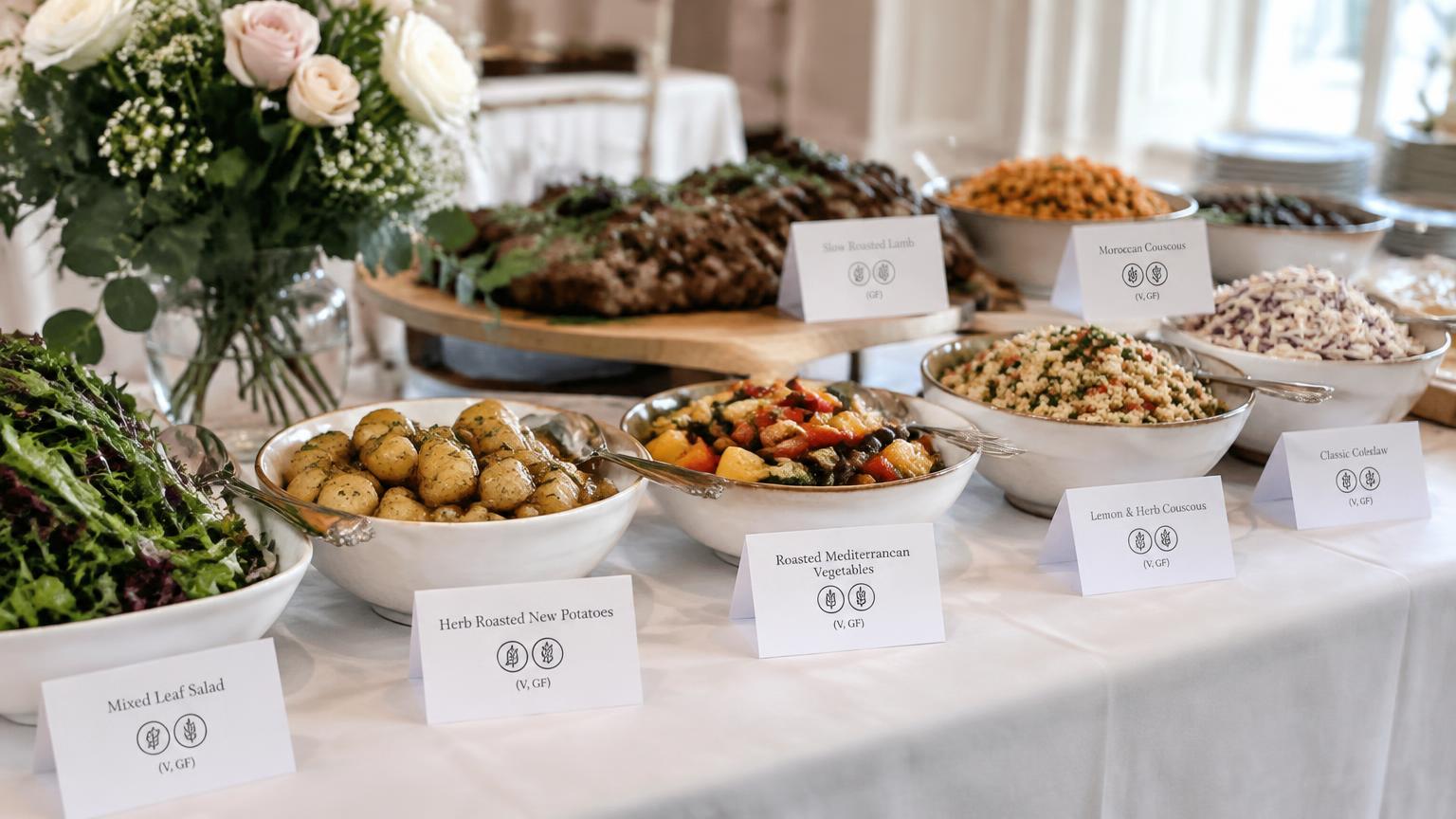
- Use one clear label. Pick “GF” or “Gluten free” and explain it in a key on the menu. Do not mix “GF”, “GF option” and “NGCI” on the same menu.
- Be careful with “GF option”. If a dish can be made gluten free, say exactly what changes, such as “served with gluten free bread”, and make sure the kitchen knows the swap must follow your full controls.
- Keep the signpost. Add a line such as “Please speak to a member of staff about allergies, intolerances or coeliac disease before ordering.” The FSA uses similar wording as an example.
- Give written information as well as a conversation. The FSA’s best practice guidance for the out of home sector sets an expectation that written allergen information accompanies loose food, alongside a conversation with the customer.
- Update it the moment something changes. A new bread supplier or a different soy sauce can turn a gluten free dish into one that is not. Out-of-date folders are a common weak spot.
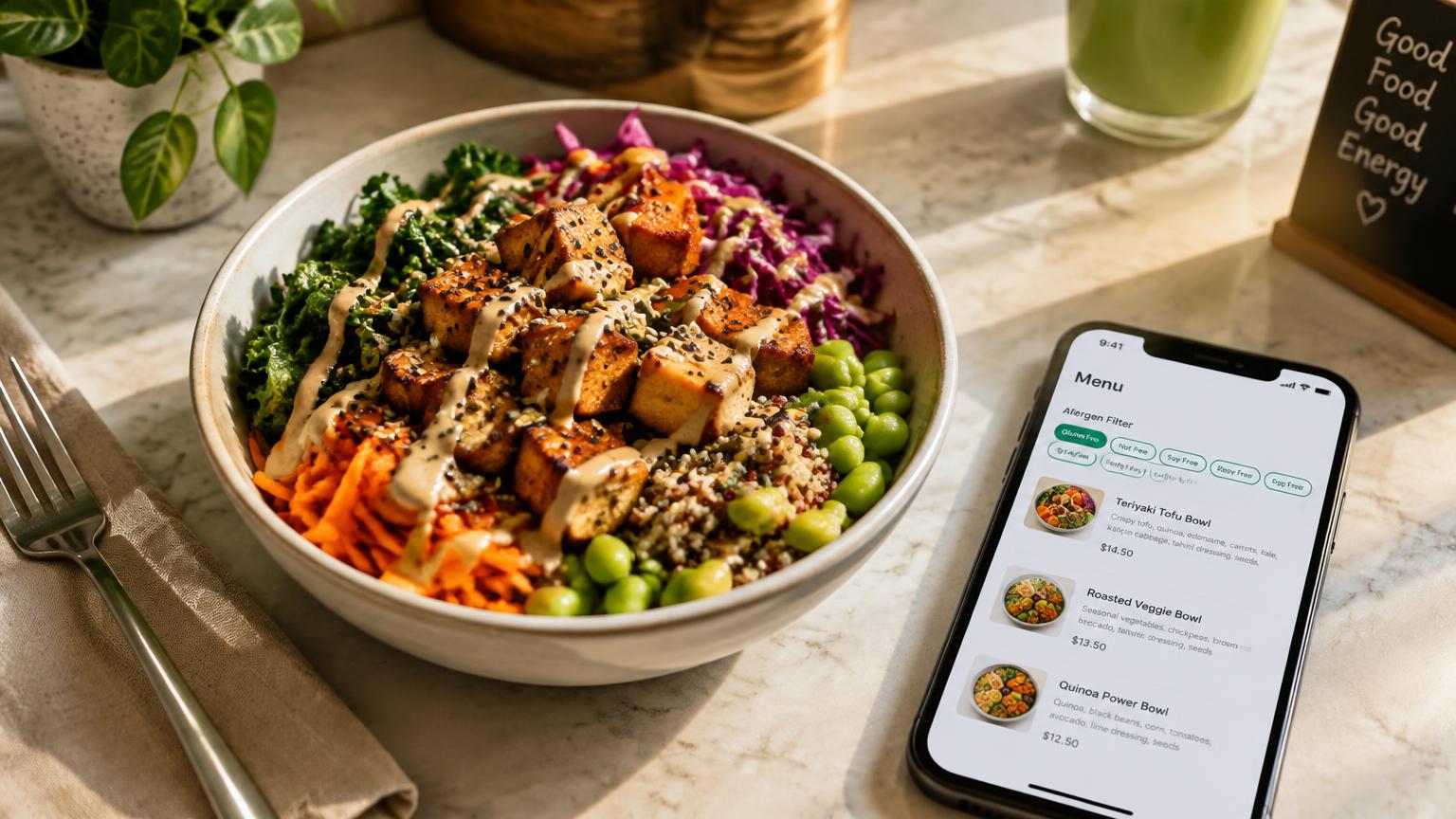
A simple way to keep all of this in one place is a digital allergen menu. With Allergenius, you add each dish once with its 14 allergens, and customers scan a QR code to filter the menu by what they need to avoid, including gluten. When a recipe changes, you update it once and the change goes live straight away, so your printed menus never go out of date. If you are wondering whether a QR menu meets the rules, read are QR code allergen menus compliant in the UK?
Prefer to start on paper? Our free allergen matrix template gives you a clear grid to record gluten and the other 13 allergens for every dish.
What is law and what is proposed
It helps to keep the legal picture straight, because there is a lot of noise online.
| Topic | Status today |
|---|---|
| Declaring gluten as one of the 14 allergens for loose food | Law |
| “Gluten free” only for food at 20mg/kg or less, including restaurant food | Law |
| “Very low gluten” only at 100mg/kg or less, with specially processed cereals | Law |
| Avoiding NGCI statements | FSA best practice guidance |
| Written allergen information alongside a conversation for loose food | FSA best practice guidance (England, Wales and Northern Ireland) |
| Owen’s Law: mandatory written allergen information on restaurant menus | Proposed, not yet law |
For the latest on Owen’s Law and what it could mean for your menu, see our explainer: Owen’s Law explained.
Getting gluten free right: a quick summary
- “Gluten free” is a legal claim with a 20ppm limit, and it applies to restaurant and cafe food.
- The FSA advises against NGCI. Use “gluten free” where your controls support it, and a clear risk statement where they do not.
- Most problems come from cross-contact, especially shared fryers, toasters and utensils.
- Keep your allergen information written, accurate and up to date, and train every member of the team.
Done well, gluten free food is a real reason for coeliac customers, and the friends and families who eat with them, to choose you again and again.
Make your allergen information easy for every customer
See how a live, filterable allergen menu works by trying the Allergenius demo menu. Scan it on your phone and filter out gluten to see what your customers would see.
Ready to replace the allergen folder? Sign up to Allergenius and build your first digital allergen menu today, or see the plans on our pricing page. If you would rather we did it for you, ask about our done-for-you set-up.
Frequently asked questions
Is “gluten free” a legal term in the UK?
Yes. Under retained Regulation (EU) No 828/2014, food can only be described as gluten free if it contains no more than 20mg/kg (20 parts per million) of gluten as sold to the customer. The FSA confirms this applies to non-prepacked food served in restaurants and cafes, not just packaged products.
Can a restaurant use “No Gluten Containing Ingredients” (NGCI)?
It is not banned, but the FSA advises businesses to avoid NGCI statements because they can mislead people with coeliac disease. If you still use NGCI, the FSA says you should make clear that those dishes are not suitable for people with coeliac disease.
Do I need to test my dishes to call them gluten free?
The law sets a limit of 20mg/kg but does not say every dish must be lab tested. What matters is that you are confident the food meets the limit, which in a kitchen means checked ingredients and strict controls against cross-contact. Some businesses choose testing or an accreditation scheme, such as Coeliac UK’s, for extra assurance.
Can chips be gluten free if they share a fryer with battered fish?
No. Oil shared with battered or breaded food can transfer gluten, so chips cooked in it should not be described as gluten free. Use a dedicated fryer and oil if you want to make the claim.
Are oats gluten free?
Only if they are specially produced to avoid contamination from wheat, rye and barley, and their gluten content does not exceed 20mg/kg. Regular oats should not be used in dishes you call gluten free.
Is Owen’s Law in force yet?
No. Owen’s Law, which campaigns for written allergen information on restaurant menus, is still a proposal. As of September 2026 it had not been enacted. The FSA’s current guidance already encourages written allergen information as best practice.
Ready to Simplify Allergen Management?
If you're looking for a solution to display your allergens to your customers, Allergenius makes it easy with digital menus and QR codes.
Get the free allergen matrix (PDF + editable Excel)
Enter your details and we'll email you both versions – the printable PDF for the kitchen wall, and the fill-in Excel version for your computer.
We'll email your download link straight away. A member of our team may be in touch to see how you're getting on. See our privacy policy.